Olivia Rodrigo’s debut album is pure lyrical genius and shows a talent that will undoubtedly continue to grow
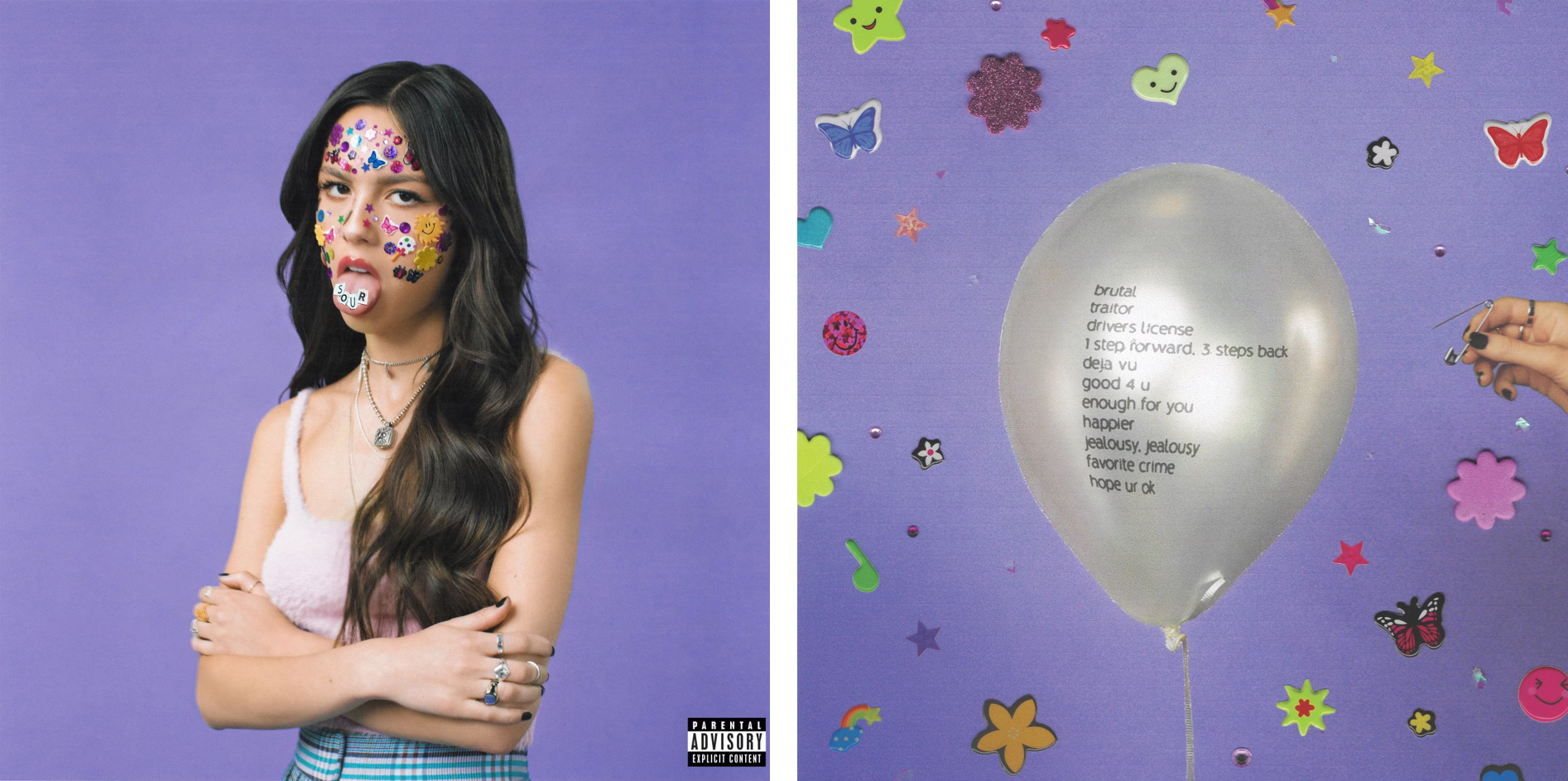
Olivia Rodrigo's debut album, "Sour," is comprised of 11 emotionally-charged tracks (Image courtesy of Geffen Records).
On May 21, Olivia Rodrigo released her debut album, Sour. At only 18 years old, the singer shares valuable lessons about the emotional rollercoaster of a breakup, leveraging her powerful vocals and unique sound to do so. The album’s greatest strength lies in Rodrigo’s authenticity, from the audible pain in her voice to relatable lyrics about insecurity, anxiety and trust.
Rodrigo released her first single off of Sour, “driver’s license,” on Jan. 8. The passionate piano ballad is rumored to be about her HSMTMTS co-star who moved on to date another Disney star; in fact, the whirlwind of rumors pushed the song to debut at #1 on the Billboard Hot 100 chart where it remained for eight consecutive weeks and set a record for most streams in a week on Spotify (only recently beaten by Rodrigo’s own “good 4 u” on May 28). However, the reason people repeatedly streamed the song again goes back to relatability and authenticity — despite singing about a specific personal episode, Rodrigo tugs at universal memories of abandonment and the sense of getting left behind.
The next two singles off the album, “deja vu” and “good 4 u,” show off Rodrigo’s versatility and helped listeners get a sense of Rodrigo’s style. In “deja vu,” a sense of fading time is created by the tactful use of twinkling bells, lingering guitar and a melody that feels unsettled. The bridge hits hard as Rodrigo sings, “Strawberry ice cream in Malibu / Don't act like we didn't do that sh*t, too.” The song is targeted, and the unique sound is captivating.
On the other hand, “good 4 u” is a refreshing rager, reminiscent of the pop-punk era of the '90s-'00s and more specifically Paramore’s “Misery Business” (2007). The piercing lyrics, rock 'n roll inspired guitar runs and rolling drum beat create an angsty vibe as a vengeful Rodrigo confronts an ex who seems to have moved on too quickly. Plus, screaming the song — especially the chorus, “Well, good for you, you look happy and healthy / Not me, if you ever cared to ask…” — is incredibly cathartic.
With these three singles and Sour as a whole, Rodrigo is breaking multiple records in the music industry. For one, both “driver’s license” and “good 4 u” debuted at #1 on the Billboard charts, with “deja vu” only debuting a few spots lower at #8. And with approximately 385 million streams, Sour has broken the record for biggest opening week for an album by a female artist in global Spotify history. This shows tremendous promise in what’s to come as Rodrigo continues growing as an artist.
Circling back to the overarching theme of heartbreak in the album, Rodrigo puts forth “traitor” where she addresses the hurtful behaviors in a relationship that don’t technically fit the definition of cheating. She also sings “one step forward, three steps back” in which she ponders mixed signals that she knows deep-down are bad news; “enough for you” in which she explores a regret for investing so much time into a doomed relationship; “happier” where she hopes her ex is happy but not happier with his new girlfriend; and “favorite crime” in which she targets making peace with feeling responsible for being treated badly in a relationship.
These are all beautiful lyrical songs, opening with mellow guitar strums and instrumentals that continue throughout. When listened to individually, each is a well-crafted masterpiece with a distinct life lesson. Yet, when listened to as part of the album as a whole (at least on the first couple of listens), the songs seem to run together and feel slightly repetitive. Additionally, the angry “good 4 u” serves as an abrupt bridge between the more melodic tunes “deja vu” and “enough for u”; the near-shout vocal delivery style on “good 4 u” is a pretty jarring break between the other two relatively calm tracks.
The other songs on the album — “brutal,” “jealousy, jealousy,” and “hope ur ok” — are also confessionals about teenage problems. Opening track “brutal” has a grungy sound, complete with the lyrics, “And I'm so sick of seventeen/ Where's my f*cking teenage dream?” and “God, it’s brutal out here” that expose the lie that our youth is full of only sunshine and rainbows. “jealousy, jealousy” shares this frustration, using carefully crafted lines like, “Comparison is killin’ me slowly / I think I think too much ’bout kids who don’t know me,” to diagnose our generation’s unhealthy social media usage.
The closing song of the album, “hope ur ok” is a message of support for those who aren’t accepted by their parents for various reasons — one verse alludes to a girl who identifies as a member of the LGBTQ+ community. The stripped down song feels sad, but it echoes a common sentiment that everyone struggles as they’re growing up and discovering who they are.
It’s also crucial to note that Rodrigo is a diehard Swiftie because the inspiration that she draws from Taylor Swift is evident. Beyond the masterful easter eggs in music videos, there is also similar pointed lyricism and cadence. Each song also has a powerful, well-crafted bridge. However, Rodrigo is in no regard a copycat—her personality and sound is in a league all of its own.
As a whole, Sour is (brutally) honest. The emotions Rodrigo conveys reflect her self-awareness; sometimes the lessons she sings about are surface level, but this can be attributed to her age and relative inexperience. The album is doubly impactful for listeners who are Rodrigo’s age and going through the same tumultuous experiences that she sings so vulnerably about. Definitely would recommend at least one listen, if not endless.
Shruti Chauhan. Hi, I'm Shruti and I'm a senior at Blair! Apart from writing for SCO, I enjoy playing tennis, biking, and watching Netflix. More »
Please ensure that all comments are mature and responsible; they will go through moderation.